

We are living in the Upgrade Era.
Which is to say, when a new thing comes along, an even newer one is right behind it. And an even newer one is behind that one. As we use the product or service—a car, AI model, phone, TV—we are simultaneously anticipating the next one.
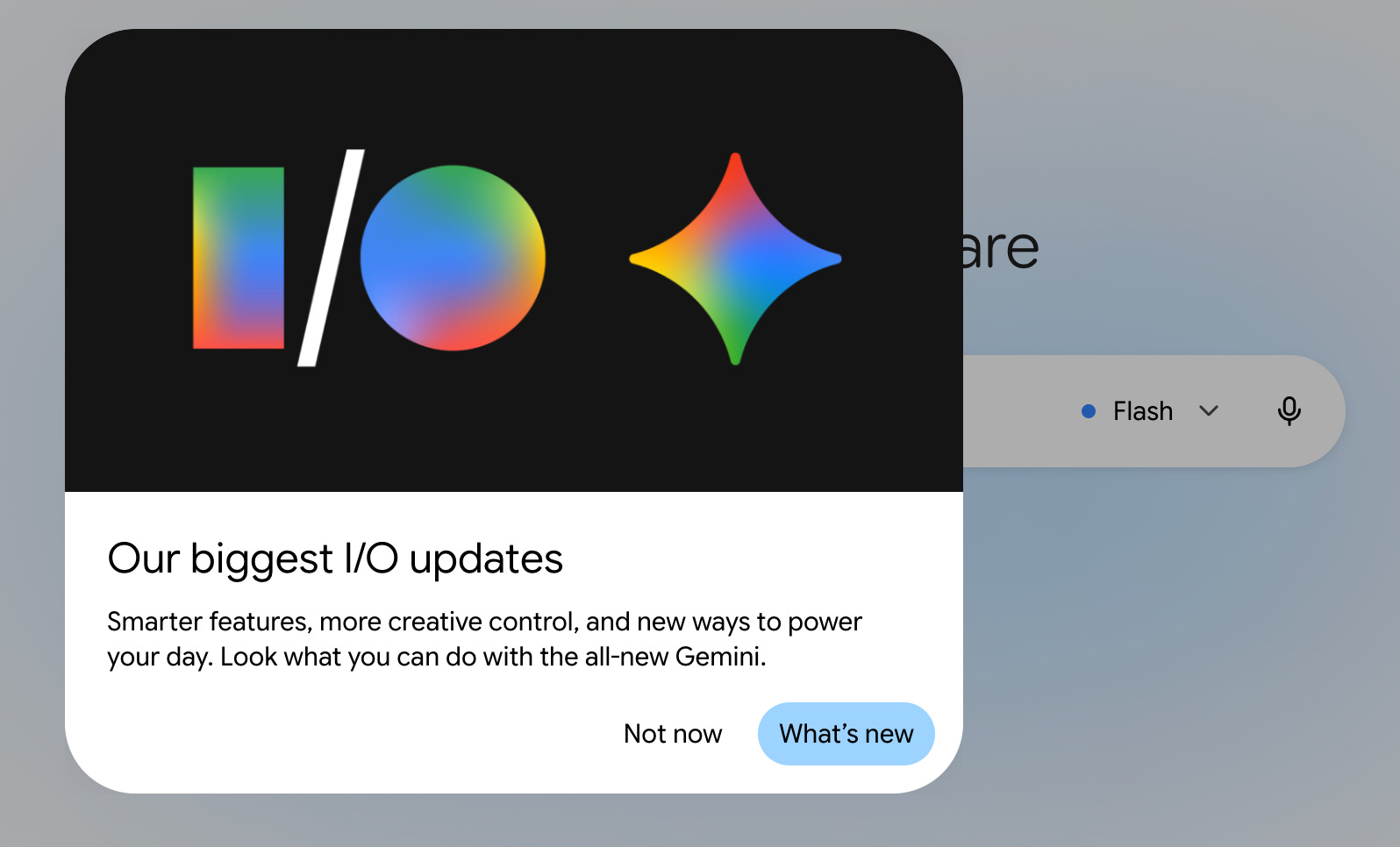
We’ve always had upgrades, but not this fast and frequent—a shift driven by the AI moment we are in.
With AI today, usage of it happens with anticipation for what’s next. New models are released constantly—GPT-5.5, Gemini 3.5 Flash, Fable 5. Soon thereafter, talk of another new model begins, and the cycle starts anew.
Beyond the AI models themselves, AI has become the central hook for non-AI products and services to push upgrades. Regular vacuums, TVs, and phones are now AI-powered vacuums, TVs, and phones. Even shoes.
Apple, the king of the upgrade, recently announced an upgrade to its voice assistant, Siri, rebranding it as Siri AI. And one of the company’s biggest upgrades in recent years was its own spin on AI—Apple Intelligence.
In the Upgrade Era, the upgrade is a selling point. The promise of a better future version of what you have today—what is still new—is a key feature.
In Saying No to New, I spoke with psychologists and economists about why humans seek upgrades, and dug into research about how businesses use upgrades to keep us chasing new things.
With that in mind, here are a few things I’ve learned about the invisible forces underpinning our hunger for an upgrade.
We like the current version of something less when we know an upgrade is coming.
I’ve written before about something called the next effect. Researchers at the University of Chicago found that knowledge of something newer coming in the future makes you like the current version of something less.
In the study, they had participants play a video game and told some of them that a sequel was in the works. When the volunteers learned about the upcoming version, they rated the game as being less enjoyable.
“Mere awareness of future improvement led participants to experience present versions as less enjoyable—despite being new to them, and despite being identical across conditions,” researchers wrote.
We prefer upgrades within familiar settings.
Humans are instinctively drawn to new things. But if something is too novel, it may have the opposite effect.
It’s like if you are pitching a new idea at work. New ideas are generally greeted with positivity. We are told that innovation is essential to keep adapting. But in a study, researchers discovered that if your ideas are too new, they’re less likely to get the green light.
They called it the novelty paradox. In the workplace, newness is encouraged for innovation, but we are inherently biased against too much of it.
Enter the Wundt curve, a concept I wrote about last week. The Wundt curve says that a new thing packaged within a familiar context is just the right balance. It has the comfort of the familiar, paired with the delight of the novel.
This balance is what makes an upgrade so appealing. It’s a novel concept (the new product or model) wrapped in the familiar (the company that built the tool you’re using today).
Businesses leverage upgrades to keep us locked in.
Businesses leverage these truths with an effective strategy known as cognitive lock-in. With cognitive lock-in, we become tangled in a web of familiar products and services, making us less likely to jump to a different brand, and more likely to upgrade within the same ecosystem.
If you have all Google products, you’re less likely to get an Apple device because you’d be moving to unfamiliar interfaces and breaking the seamless connectivity you have between your products.
The more products and services you buy, and the more upgrades you acquire, the more locked-in you become. The more locked-in you become, the higher the switching costs.
Is this such a bad thing?
If upgrades are meant to be better, aren’t more of them better for us? Upgrades aren’t inherently bad. But when we careen from one upgrade to the next, we lose enjoyment in the things we already have. And we lose control, upgrading not because we really want or need it, but because the product or service wants us to do it.
So the next time you’re thinking of an upgrade, ask yourself:
Do I really like my current version less? Or am I just feeling the next effect?
Do I need this upgrade? Or am I being pulled in by novelty within the familiar?
Am I sticking with this brand because I genuinely love it? Or am I experiencing cognitive lock-in?
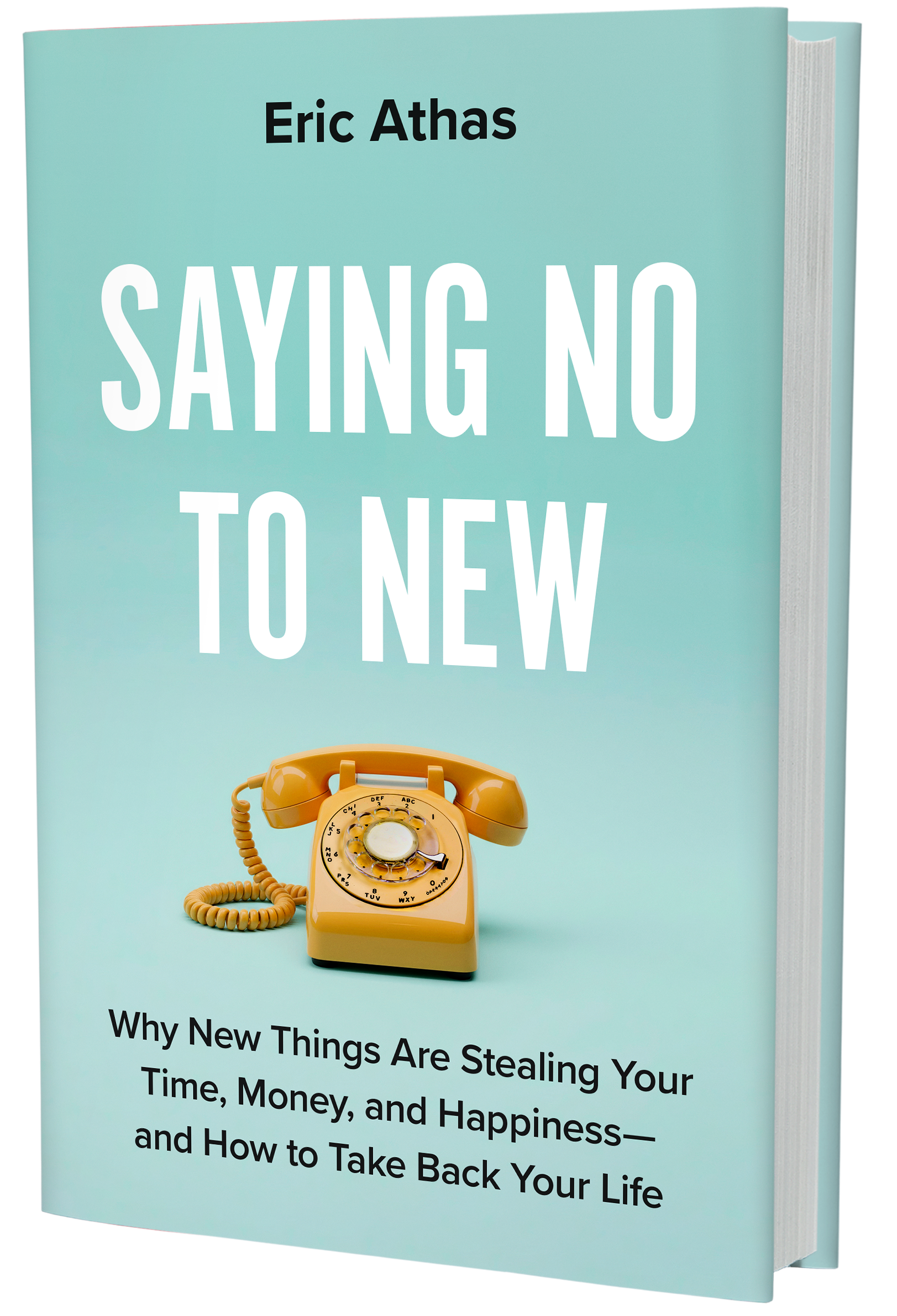
Want to win a free copy of my book?
My book, Saying No to New, goes on sale on September 15. You can learn how to preorder your copy here.
While you wait, here’s a chance to win a free one. My publisher is giving away 20 copies in a Goodreads Giveaway.
The giveaway runs through June 30. Enter at Goodreads for a chance to win.
Thanks for reading.
Eric